
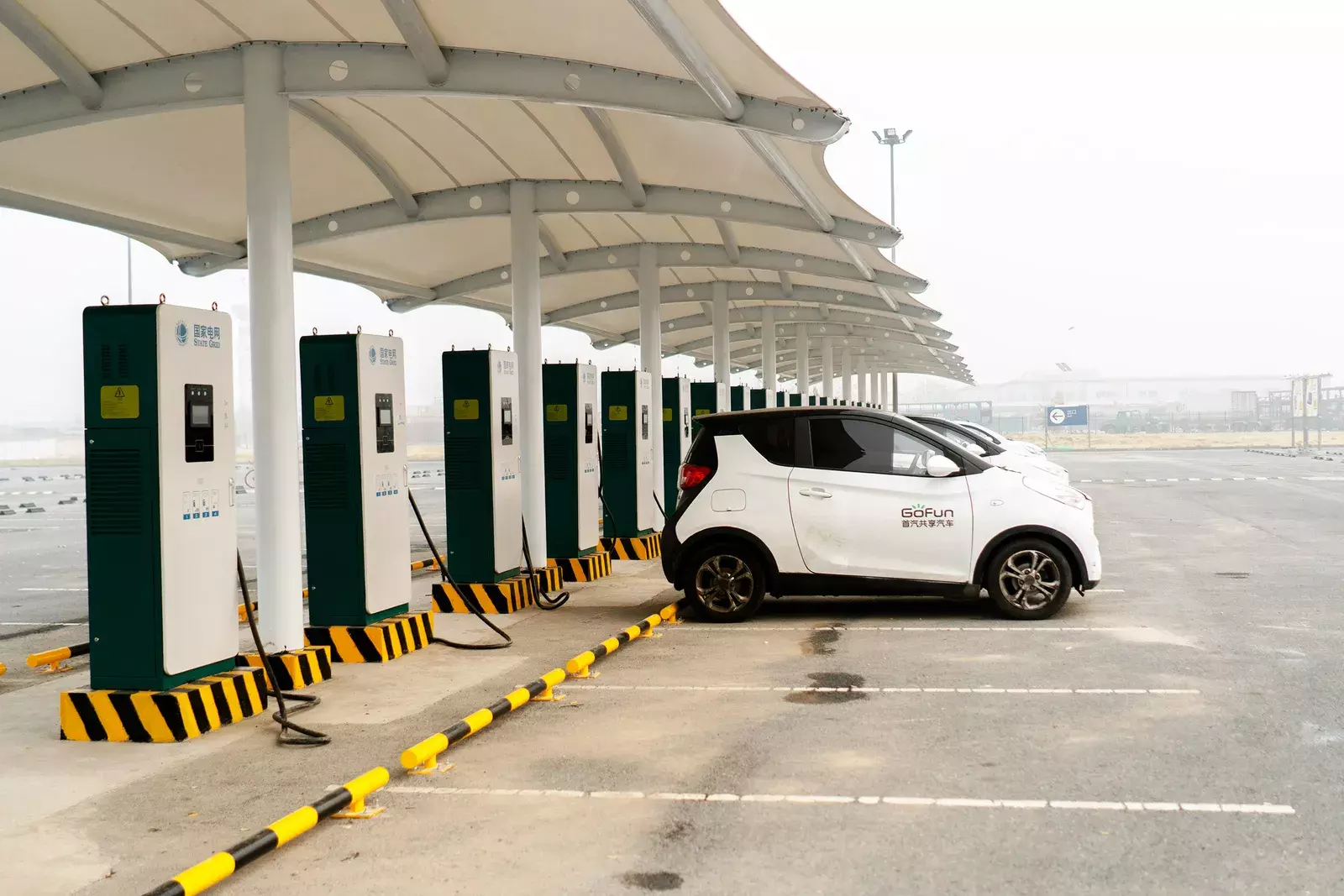
The conventional view of the Hormuz crisis frames China as trapped, given that nearly half of its crude imports transit the strait. While strategic reserves provide a temporary buffer, they are finite. Electrification, however, offers a structural solution by permanently reducing the necessity for imported fuel. In the first half of 2026 alone, China’s electric vehicle fleet displaced approximately 1.35 million barrels per day—an amount equivalent to roughly 10% of the daily crude flow through Hormuz in 2025.
This transition began with predictable urban bus routes but has rapidly expanded into the passenger vehicle market. In 2025, China sold nearly 13 million electric cars, with 70% of battery-electric models retailing at prices lower than conventional combustion alternatives. The focus is now shifting toward heavy freight, where electric semi-trailer adoption surged 150% year-on-year in early 2026. By targeting industrial clusters and fixed transport corridors, China has bypassed the traditional logistical hurdles of long-haul electrification.



Comments (0)
No comments yet. Be the first!