
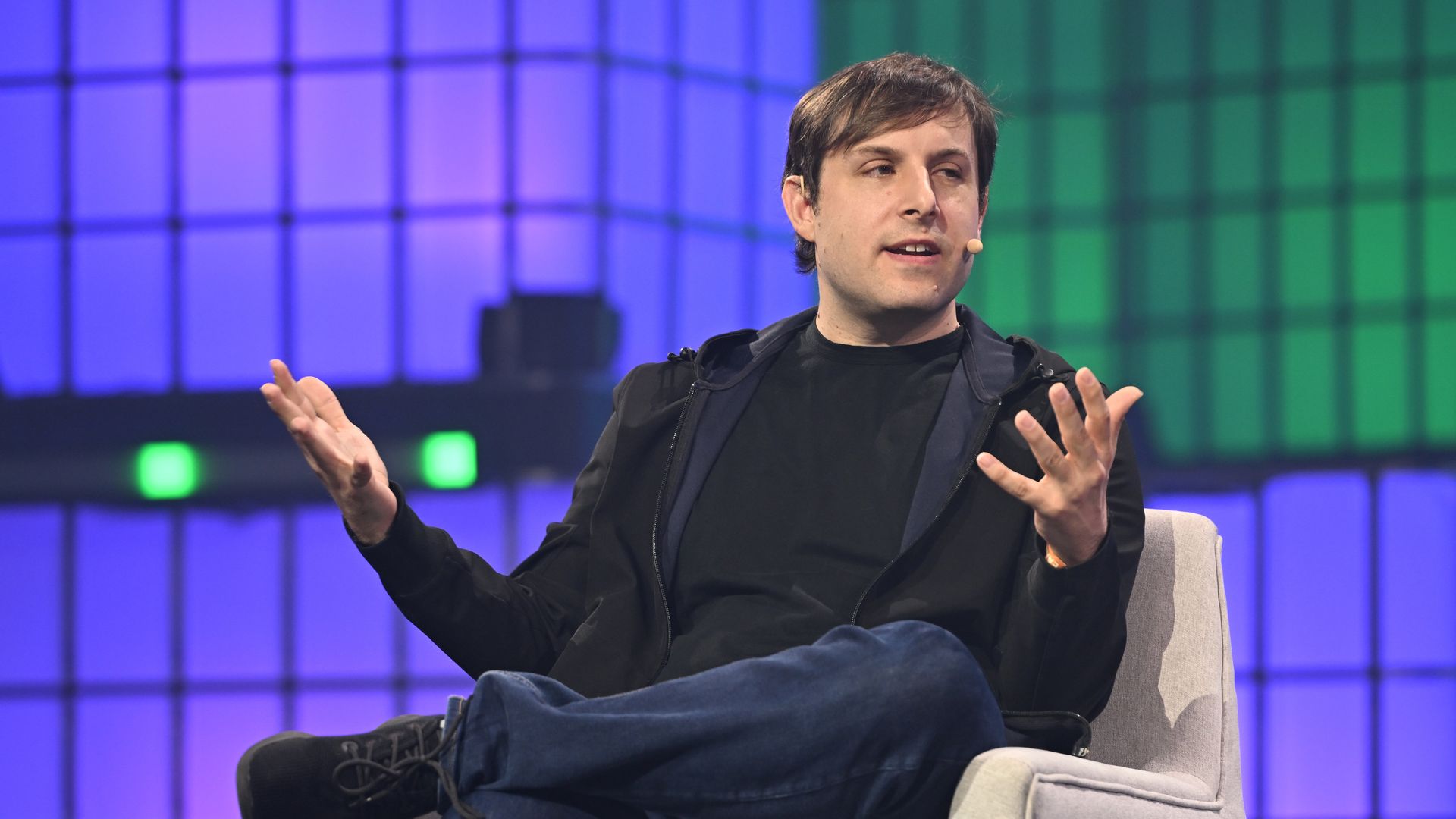
Founded in 2021 by former Tesla engineers Lukas Pankau and Allen Pan, the company utilizes proprietary foundation models to bridge the gap between vision, motion, and task context. The founders, who experienced the frustrations of rigid, 1980s-era factory equipment firsthand, developed the technology to allow robots to learn through high-fidelity simulations rather than manual programming. This virtual training enables the systems to handle high-precision assembly, such as threading delicate cables or stripping protective films, with speeds and accuracy that match or exceed human workers.
Industrial Next Aims to Replace Rigid Factory Lines With AI Robotics
San Francisco startup Industrial Next is attempting to solve the manufacturing bottleneck of fixed automation by introducing AI-driven robotic stations that can be retooled in minutes. By moving away from hard-coded scripts, the company aims to automate delicate tasks that have long remained dependent on human labor.

The startup is currently collaborating with the BMW Group Technology Office to evaluate the performance of its dexterous manipulation systems in automotive settings. While the company is already deploying workstations for high-volume smartphone manufacturing, its ultimate ambition remains the creation of an end-to-end autonomous car assembly line. By allowing robots to adapt to new product models without significant downtime, the founders seek to eliminate the traditional trade-off between manufacturing flexibility and speed.

Comments (0)
No comments yet. Be the first!